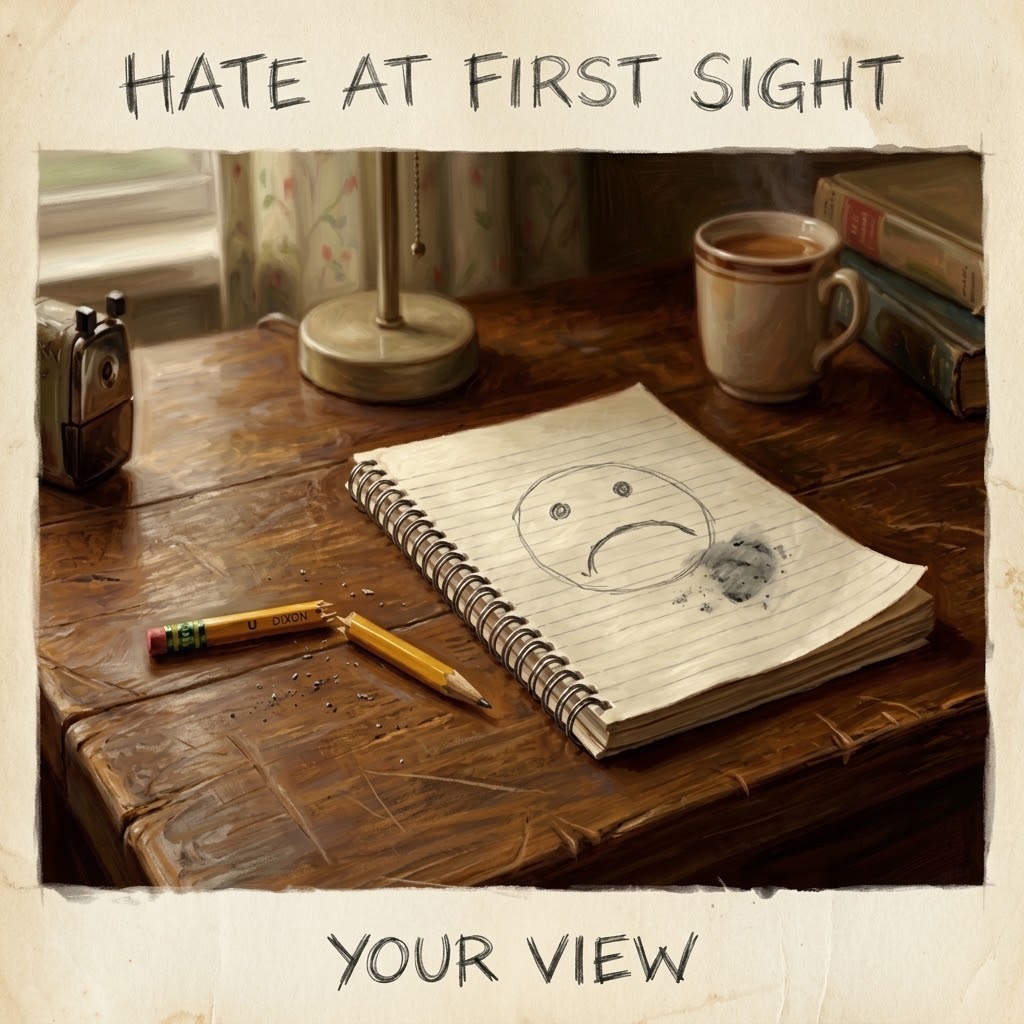
There is a particular frustration in realizing that someone else’s idea of you may be more convincing to them than the truth of your own experience. Hate At First Sight builds “Your View” around this disconnect, pairing a theme of conflicting perceptions with an alternative rock sound that draws on industrial music, post punk, and electronic influences. The result connects an interpersonal subject with a musical identity that resists easy classification.
The track’s character rests on the contrast between aggression and atmosphere. Heavy guitar work gives the music a forceful foundation, while bass lines and eighties-inspired synth textures introduce a different kind of pressure. The industrial influence adds a mechanical edge, and the post punk elements bring a sense of tension that keeps the sound from feeling straightforward. Rather than treating these styles as separate ingredients, Hate At First Sight draws them together into a broader alternative sound.
That combination suits the subject of “Your View.” Perception is rarely neutral; personal history and assumptions influence what people believe they see in others. When those interpretations become fixed, the person behind them can disappear beneath a version that does not reflect their reality. The song’s central idea therefore reaches beyond simple miscommunication, pointing toward the difficulty of being understood when someone else’s judgment has already shaped the conversation.
For Hate At First Sight, the strength of the single lies in bringing that idea into a sound with real weight and character. The guitars supply the immediate impact, while the bass and synth textures expand the atmosphere beyond conventional alternative rock. Its varied influences give the music an identity of its own without losing the directness that makes heavier music engaging. “Your View” ultimately considers the distance between appearance and experience, leaving listeners with a question worth considering: how well can we understand another person when we see them only through our own assumptions?